AI for Financial Risk Management: Smarter Fraud Prevention and Risk Control

Futurism Technologies
March 20, 2026 - 3.2K
5 Min Read
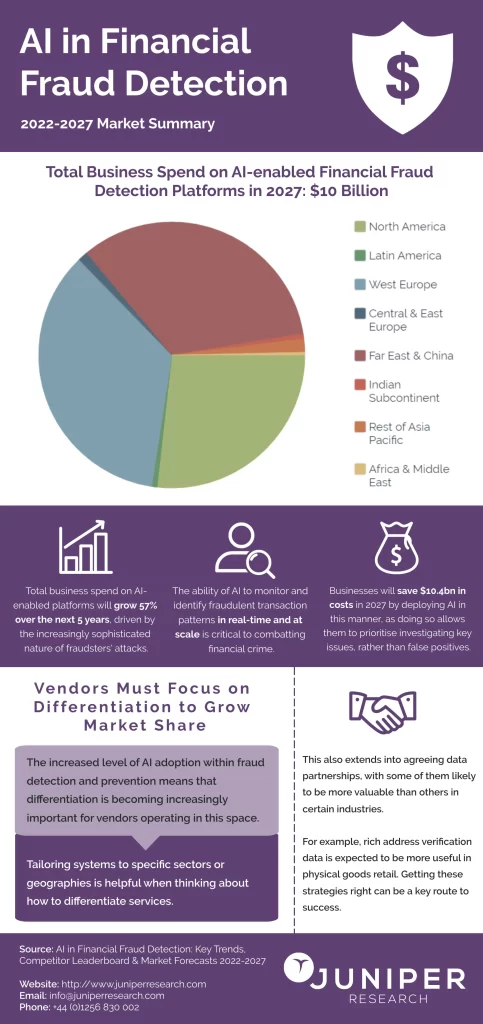
Did you know? In 2025, AI has become foundational to financial risk management, with over 85% of financial firms applying it to fraud detection, advanced risk modeling and compliance. Now in this digital world AI for Financial Risk Management is no longer optional it’s a competitive necessity.
From fraud detection to cyber resilience, U.S. enterprises are turning to AI driven insights, automation and predictive modeling to defend margins, safeguard trust and ensure regulatory readiness. This blog breaks down the most essential use cases, benefits and governance requirements so your organization can deploy AI confidently and compliantly.
1. Why AI in Finance Has Become the New Risk Command Center
Risk is no longer a back-office function. For CEOs, CFOs, CIOs, CISOs and transformation leaders it’s now directly tied to growth, valuation and regulatory credibility.
Traditional rule-based systems struggle with:
- Evolving fraud patterns
- High false positive rates
- Slow incident detection
- Unmanageable risk complexity
- Human dependent processes
AI reverses this dynamic with:
- Real-time insights
- Automated decisioning
- Pattern detection at scale
- Stronger accuracy and fewer false alarms
- Continuous learning from new threats
In mid to large U.S. enterprises where revenue, customer volume and cyber exposure are high AI Risk Management refines decision making across fraud, credit, cyber, operational and market risks.
2. High Impact Use Cases of AI for Financial Risk Management
Below are the use cases delivering the fastest ROI and strongest operational impact.
2.1 AI for Fraud Risk Detection
Fraud is evolving faster than human led teams can track. AI based detection blends supervised ML, anomaly detection, graph networks and behavioral analytics to identify threats earlier and more precisely.
Key Applications
- Real time fraud scoring across transactions and payment rails
- Mule account network detection using graph modeling
- Deepfake resistant identity verification (liveness detection, biometrics)
- APP (Authorized Push Payment) scam prevention through NLP narrative analysis
- Device and behavioral biometrics for synthetic ID detection
Why AI Wins
- Catch patterns that rules miss
- Learning from new fraud signatures
- Dramatically reduces false positives
- Improve customer experience by reducing unnecessary declines
Relevance for U.S. Leaders
Enterprises in BFSI, e-commerce, insurance, fintech and payments are especially vulnerable due to high digital transaction volume and cross channel fraud attempts.
2.2 AI-Enhanced Credit Risk Management
Credit portfolios today face volatile macro dynamics, SMB vulnerability and fast changing consumer behavior.
AI Enables:
- More accurate Probability of Default (PD) and Loss Given Default (LGD) modeling
- Early warning indicators through signals such as cash flow trends, spending drops and industry stress
- Dynamic credit limit adjustment
- Fairer lending decisions with interpretable ML
AI-driven scoring models combine structured and behavioral data enhancing accuracy while meeting regulatory explainability needs.
2.3 AI for Cyber and Operational Risk Management
With operational disruptions and cyber incidents rising, AI strengthens security and incident response.
Top Cyber Use Cases
- UEBA (User and Entity Behavior Analytics)
- Anomaly detection in network traffic and access logs
- AI-assisted threat triage and severity classification
- Automated root cause insights and incident summaries
Why It Matters
With the average data breach in finance costing over $6M, AI can significantly shrink detection and containment time lowering legal, regulatory and reputational fallout. [ibm.com]
2.4 AI in Market and Liquidity Risk Monitoring
Market volatility and liquidity stress require continuous, high frequency analysis.
AI Supports:
- Intraday Value at Risk (IVaR) recalculations
- Stress scenario modeling
- Liquidity coverage forecasting
- Market manipulation and abuse detection
AI tools help finance and risk teams spot unusual activity much faster and cut down potential losses when the market becomes unstable.
3. Why AI Risk Management Is the New Regulatory Expectation
Regulators are tightening expectations around the use of AI in Finance especially regarding model governance, transparency, fairness and cyber disclosures.
Key frameworks influencing 2026 requirements:
- Federal Reserve SR 11‑7: Model Risk Management expectations for all AI/ML models (documentation, validation, monitoring) [federalreserve.gov]
- SEC Cyber Disclosure Rule (2023–2024):
Requires rapid reporting of material cyber incidents and detailed descriptions of cyber risk governance in annual filings. [sec.gov] - Basel and FSB (AI and third-party concentration risk):
- Focus on model transparency, bias mitigation, data governance, and vendor reliability. [bis.org], [fsb.org]
Takeaway:
Your AI systems must not just perform they must be auditable, explainable and defensible.
4. Enterprise Grade Financial Risk Management Solutions Powered by AI
AI-driven Financial Risk Management solutions deliver a unified view of exposure across every risk dimension, complete with automation, advanced analytics and real-time controls.
Capabilities include:
- Real time fraud scoring and interdiction
- Credit risk modeling and portfolio optimization
- Cyber threat detection and incident triage
- Market, liquidity and operational risk modeling
- Regulatory reporting assistance
- Continuous monitoring and drift detection
- Explainability dashboards and compliance workflows
These capabilities help enterprises reduce losses, improve customer confidence and maintain regulatory alignment.
5. Proven Real‑World Success Stories:
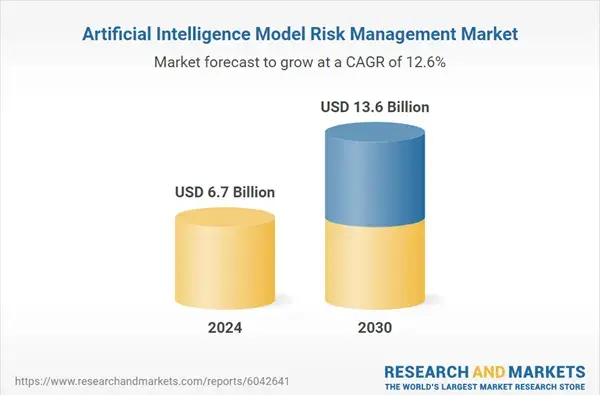
AI driven financial risk management has revolutionized the industry with companies reporting 15% – 20% efficiency gains, enhanced fraud detection and in some cases reducing underwriting work from day to minute.
JPMorgan Chase:
JPMorgan uses AI to monitor transactions in real time, spot unusual activity faster and cut fraud related losses. Their AI systems also support credit risk checks and streamline compliance processes, helping teams react more quickly than with traditional manual methods. (Source: www.fintechtris.com)
Goldman Sachs:
Goldman Sachs applies AI to better understand market risks and refine trading strategies. By integrating AI insights into their investment decisions, the firm has strengthened risk forecasting and improved overall portfolio performance. (Source: www.fintechtris.com)
6. Implementation Roadmap: How U.S. Enterprises Can Scale AI
Phase 1: Foundation
- Data consolidation (payments, CRM, ERP, access logs)
- Feature engineering + model inventory setup
- Quick-win pilot (fraud or cyber)
Phase 2: Expansion
- Deploy graph analytics for network risk
- Launch early warning credit models
- Integrate AI incident triage
Phase 3: Enterprise Rollout
- Full SR 11-7 aligned governance framework
- Real time dashboards and automated controls
- Cross risk AI orchestration
Phase 4: Optimization (6–12 Months)
- Active learning to reduce false positives
- Predictive simulations for liquidity and market stress
- Integrate AI into broader transformation initiatives
7. KPIs That Prove ROI to Your Board
To quantify the value of AI in Financial Risk Management, track:
Fraud KPIs
- Fraud loss rate (pre vs. post AI)
- False positive reduction
- Approval uplift
- Analyst efficiency
Credit KPIs
- Default forecasting accuracy
- Early warning lead time
- Portfolio loss reduction
Cyber KPIs
- Mean Time to Detect (MTTD)
- Mean Time to Respond (MTTR)
- Breach cost avoidance
Compliance KPIs
- Documentation completeness
- Model validation cycle times
- Disclosure readiness
8. Conclusion:
AI is reshaping how U.S. enterprises detect fraud, manage credit exposure, mitigate cyber threats and comply with regulatory scrutiny. With fraud skyrocketing, breach costs rising and pressure increasing from regulators and boards, AI for Financial Risk Management is no longer a forward-looking concept. It’s a now strategy.
Partner With Futurism AI
Your Trusted AI Development Company
If your organization is ready to operate Risk management solutions powered by AI fraud detection, credit intelligence, cyber defense or regulatory automation Futurism AI is here to help.
Why Leading U.S. Enterprises Choose Futurism AI
- Deep expertise in AI/ML engineering
- Proven delivery of AI Powered Financial Risk Management solutions
- SR 11‑7 aligned governance frameworks
- End to end development, deployment and optimization
- Enterprise grade security and compliance controls
Take the first step today.
Visit www.futurismai.com to schedule a personalized consultation with our AI experts and build your AI-powered financial risk ecosystem.
Protect your enterprise. Strengthen your decisions. Stay ahead of emerging threats with AI you can trust.