
- Services
- AI for Healthcare Diagnostics

In the rapidly advancing healthcare sector, accurate and timely diagnostics are crucial for effective treatment. Futurism’s AI for Healthcare Diagnostics solutions harness the power of Artificial Intelligence to revolutionize the way medical diagnoses are made. Our advanced AI-driven systems enable healthcare providers to detect and diagnose medical conditions with greater accuracy, speed, and cost-efficiency than traditional diagnostic approaches.
By utilizing cutting-edge technologies such as deep learning, computer vision, and machine learning, our AI solutions analyze medical data including imaging, patient histories, lab results, and more to provide precise, actionable insights that help doctors and clinicians make better-informed decisions.
Futurism’s AI for Healthcare Diagnostics services are designed to enhance healthcare practices and improve patient outcomes. Here’s a breakdown of the key offerings:
Implementing AI in healthcare diagnostics can dramatically improve the efficiency and effectiveness of medical practices. Here are the key benefits:
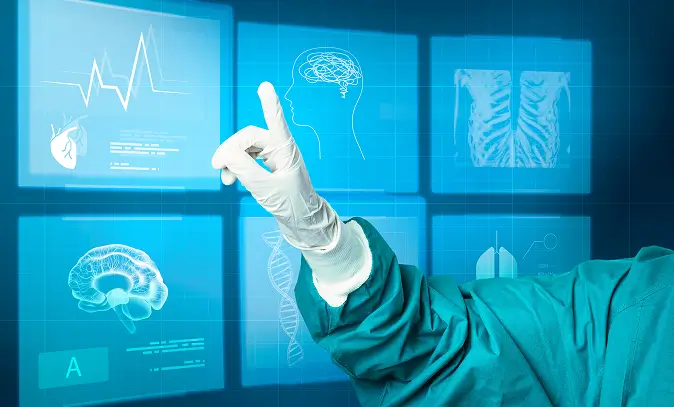
AI models are trained on vast datasets and are capable of detecting patterns in medical data that humans might miss. This helps healthcare providers make more accurate diagnoses, reducing the risk of errors and improving patient outcomes.

AI-powered diagnostic tools can process large volumes of medical data in real-time, significantly reducing the time it takes to diagnose conditions. Faster diagnosis leads to quicker treatment, improving the chances of a positive outcome.

By automating routine diagnostic tasks, AI helps reduce the burden on healthcare professionals, allowing them to focus on more complex cases. This also helps reduce operational costs in healthcare settings, making diagnostic services more affordable.

Real-time alerts and predictive models can help healthcare providers detect potentially life-threatening conditions before they escalate. By catching issues early, AI can help prevent complications and improve patient safety.

AI-enabled diagnostic tools are especially beneficial for underserved areas, where access to specialist healthcare may be limited. With remote diagnostics powered by AI, patients can receive accurate evaluations and timely treatments, even in remote locations.

AI solutions can handle a large volume of data simultaneously, allowing healthcare systems to scale without compromising the quality of diagnoses. Whether it’s handling a surge in patient cases or analyzing large datasets, AI can provide reliable support.
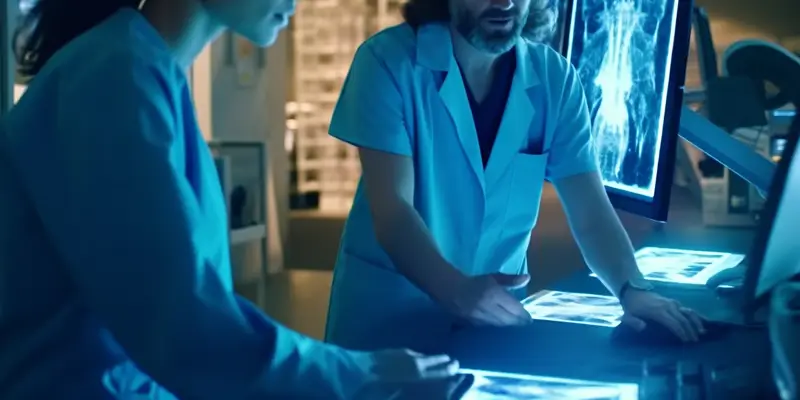
AI for healthcare diagnostics automates time-consuming tasks, such as analyzing images, generating reports, and identifying abnormal patterns. This reduces the administrative burden on healthcare providers and allows them to focus on patient care.

AI-powered decision support systems consider a wide range of factors when suggesting treatment options. This allows healthcare professionals to create personalized treatment plans based on each patient’s unique medical history, genetics, and current condition.
Futurism’s AI for Healthcare Diagnostics uses advanced machine learning and deep learning techniques to process and analyze complex medical data. Here's an overview of how our system works:



Futurism’s healthcare diagnostic tools are transforming the medical field. Here are some notable use cases:
AI-driven imaging analysis can detect early-stage tumors in medical images, such as mammograms or CT scans. Early detection leads to earlier intervention, increasing survival rates and reducing treatment costs.
AI systems analyze heart images, ECG data, and other health indicators to detect early signs of cardiovascular diseases, including heart attacks, arrhythmias, and blood clots. This enables timely treatment and reduces the risk of severe complications.
AI helps in diagnosing neurological conditions like Alzheimer’s, Parkinson’s disease, and strokes by analyzing brain scans and patient histories. By identifying early warning signs, healthcare providers can intervene before the disease progresses.
AI-based predictive models assess blood sugar levels, lifestyle factors, and medical history to predict the onset of diabetes or complications such as diabetic retinopathy. This allows for proactive management of the condition.
AI models analyze diagnostic test results and patient histories to detect infections such as tuberculosis, HIV, and COVID-19. Early identification of infectious diseases helps contain outbreaks and provide targeted treatment.
Enhance your healthcare practice with Futurism’s state-of-the-art diagnostic solutions to enhance patient outcomes, reduce errors, and make faster, more accurate diagnoses.
AI for healthcare diagnostics refers to advanced medical analysis systems powered by deep learning, computer vision, and predictive analytics. These systems process imaging scans, lab results, patient histories, and other clinical data to support faster, more accurate diagnostic decision-making transforming how diseases are detected, monitored, and treated.
Using deep learning and advanced pattern-recognition models, AI analyzes imaging scans, lab data, and patient records to detect indicators of disease. These systems flag high-risk cases, support early intervention, and enhance clinical decision-making with data-backed insights.
AI improves accuracy by identifying subtle patterns and anomalies in imaging and clinical data that may not be visible to the human eye. It analyzes vast datasets to reduce diagnostic variability, improve sensitivity and specificity, and minimize human error.
Specialties like radiology, oncology, cardiology, neurology, pathology, and infectious disease analysis benefit greatly. These AI diagnostics tools help detect fractures, tumors, heart anomalies, neurological disorders and infectious diseases with high precision.
AI diagnostic systems typically use a combination of: Medical imaging data (X-rays, CT scans, MRIs, ultrasounds), Laboratory results (blood work, biomarkers, genetic tests), Patient medical histories, Vital signs and continuous monitoring data (from wearables or bedside devices). Accurate preprocessing, normalization, and secure aggregation of this data are essential for reliable AI-driven analysis.
Yes. AI-powered diagnostics can analyze patient data collected from wearable devices, remote monitoring tools, and telehealth platforms. This enables clinicians to track patient health in real time, detect early signs of deterioration, adjust treatment plans proactively, reduce unnecessary in-person visits. This is especially valuable for chronic care management and rural healthcare delivery.
Yes. AI diagnostic tools can integrate securely with EMR/EHR systems to ensure smooth access to patient records, imaging data, lab reports, and clinical notes. This creates a unified, intelligent diagnostic workflow that enhances clinical efficiency and reduces documentation burdens.
Faster diagnostic turnaround times, improved detection accuracy, reduced human error and bias, greater diagnostic coverage in resource limited settings, streamlined clinical workflows, enhanced early disease identification. AI allows healthcare facilities to deliver more efficient and consistent patient care.
Patients benefit from faster, more accurate diagnoses, earlier detection, and personalized treatment plans. Clinicians gain improved decision support, better workflow efficiency, and reduced administrative strain, allowing them to focus on critical patient needs.
AI in healthcare is designed to assist, not replace, clinicians. It helps doctors by analyzing complex clinical data quickly, highlighting abnormalities or risk indicators, reducing manual workloads and providing data-driven second opinions. Clinical decisions ultimately rest with licensed healthcare practitioners.
No. AI complements clinicians by providing speed and analytical power, while healthcare professionals contribute clinical judgment, contextual understanding, empathy, ethical oversight and treatment decision responsibility.
Yes. Futurism’s AI diagnostic tools offer reliable, real-time clinical decision support. They integrate seamlessly with existing workflows, adhere to healthcare compliance standards, and continuously improve through machine learning. Their effectiveness is validated through real-world clinical deployments and strong performance outcomes.
 Artificial Intelligence
  Artificial Intelligence
  Artificial Intelligence
 85 Swanson Rd, Suite 275 Boxborough, MA 01719 USA
Leave a message here, and our AI expert will connect